http://fliponline.blogspot.com/2011/02/quick-trick-draw-your-timing.html
My fellow classmates, Gabi, just share this useful trick with me. For animation, timing is such an important element that can make it interesting or dull. I am struggling that, all the shots I did looks even timing. There is no fun to watch it at all. s., visualize various timing is crucial.
I usually make up different sounds when animating to figure out the timing I want. Now, I have another tool which is just waving my cursor and I can visualize how the animation is going to carry out. How cool is that!!
9/22/2013

9/07/2013
AnimSchool Interview: Muhammad Irfan Farooq
http://www.animschoolblog.com/2013/09/animschool-interview-muhammad-irfan.html
Here is Animschool's interview with Muhammad Irfan Farooq. He is the winner of 11 seconds club June winner. There is also a progression reel I think I can learn from:
-what the animator thinks about the character
-Who, what, where, when, why, how
-performance style
*Rough Timing
-use a big box to get "big vs small accent"
-thinking the transition from 1st position to 2nd
*Rough Poses and timing
-copy the box animation to root and spine,
-rough hand animation
-to see rough character poses, do they work or not
-refine key poses, make them stronger and clearer
-line of action
-strong finger poses
*Refining Timing
-put break downs, 2nd breakdowns, antic, moving holds, ease in-outs and overshoot
-arcs
*Lip sync and facial
-basic expression and lip-sync
-start from root to the other parts of body
*Polish Facial
-start with eyebrows and eyes together
-then, lip-sync and expression
-fleshy and soft
Here is Animschool's interview with Muhammad Irfan Farooq. He is the winner of 11 seconds club June winner. There is also a progression reel I think I can learn from:
Irfan--Progression Reel-- 11sec June competition ! from Irfan on Vimeo.
Planning
*Rough ideas-what the animator thinks about the character
-Who, what, where, when, why, how
-performance style
*Rough Timing
-use a big box to get "big vs small accent"
-thinking the transition from 1st position to 2nd
*Rough Poses and timing
-copy the box animation to root and spine,
-rough hand animation
-to see rough character poses, do they work or not
Refining
*Refining poses-refine key poses, make them stronger and clearer
-line of action
-strong finger poses
*Refining Timing
-put break downs, 2nd breakdowns, antic, moving holds, ease in-outs and overshoot
-arcs
*Lip sync and facial
-basic expression and lip-sync
Polish
*Polish body-start from root to the other parts of body
*Polish Facial
-start with eyebrows and eyes together
-then, lip-sync and expression
-fleshy and soft
7/15/2013
Head turn practice
Hi, Guys, I am trying to get some attitude with the head turn.
Can you guys read his emotion?
Please give me some feed back~ David
12/08/2012
REF_Soldier homecoming surprise mix
11/21/2012
[JOB] Finding an intership
It is almost the time to find intern. For me, next Spring is the last term, and I definitely need a chance to peek into the industry under the name of "student". Here are some advice of how to prepare for it.
January 2012 Article - Internships: The Good, the Bad, and the Ugly
11/07/2012
9/07/2012
Didn't get into Pixar class
One of the big things in my school is to get into the Pixar class. Within the classes, students are classified into different level according to their contemporary animating ability and taught by the animators from Pixar studio. It is the most exciting thing before the semester starts. I regards it as a certification to show you have achieve to certain animation skills. Unfortunately, I didn't get admitted this semester. All my friends who entered the school the same time as I did go in to the class. Even though the news is disappointed, I still need to prepare myself along the way to become a good animator. The sun still rises whether I get into that class or not. The career is a marathon, I NEED TO MAKE SURE I AM STILL RUNNING, and not being stopped by obstacles on the road.
The plan for this semester are:
-music for my thesis
-animation 75% of the thesis
-doing animation follow the pixar class schedule
-prepare for CTN demoreel review
The plan for this semester are:
-music for my thesis
-animation 75% of the thesis
-doing animation follow the pixar class schedule
-prepare for CTN demoreel review
12/13/2011
Animating Animals: Tips and Tricks to Animating Believable Animal Characters in a Live Action Feature
Animating Animals: Tips and Tricks to Animating Believable Animal Characters in a Live Action Feature(click)
10/27/2011
BBC Motion Gallery
I always wonder where can I get a good reference. Sometimes you can't really shoot a good reference for yourself. Besides finding clips on Youtube, there is another choice "BBC Motion Gallery". There are more things I can dig into now. Enjoy animating!
8/12/2011
[project] Last Dance
This is the animatic I submit for my midpoint review. The story is about a janitor dancing alone while mopping on the stage. The dance reflects his demonic love toward his victim.


For this project, I still need to develop the dance. Since the dance is the most important part of the whole animation, a choreographer is needed.
Sometimes when I look others doing so many amazing work, I gaze upon myself and sigh at the things I achieve now. But hey, all the masters spend time to perfect their skill and perspective. The thing I should do is to practice and practice. Give myself other small assignment other then school work. Talk to friends and teachers. My dream will come true one day.
2/16/2011
Bouncing Ball
This is my first attempt to do the bouncing ball without the tail.
In this one, it is the first time I really dive into graph editor and get a basic understanding about how different tangents work and what kind of mess it will create if you don't key your frame properly. The lighter ball in this one is trying to simulate the real ball bouncing in reality. Somehow, when it strikes the ground, it seems a little bit "sticky."
From this practice, I learn that to create a real mass in the animated word it all depends on "timing." How fast the ball going to change the shape and how fast it falls all create a sense of mass and gravity. When the momentum decrease, how would it affect the relative project (when the ball hit the box, the could just sway a little bit or be knocked off, it all counts on how much momentum the ball brings to.)
This is my second attempt to animate the ball, but this time with tail and more characteristic.
The alive ball it's easier to do, in my opinion. It doesn't have to follow a certain decrease by the law of gravity. We can define its every movement. The only thing is we have to give it enough "energy" to fight against the gravity. Before the ball take a big jump, it has to crouch longer to gather enough energy.
The tail is to show the overlapping actions. When body move, tail follows. It this film I only realize the "overlapping" aspect. Actually, in my opinion, tail has to aspects, one is "overlapping" and the other one is "balancing." Tail follows the major movement, that is correct, but there is a time when the body stays in the same place or when landing tries to buffer the impact force.
There are so many things to learn in animation, and a pair of fresh eyes are needed. Don't be shy to ask others to comment your works.
Jellyfruit
2/07/2011
12 principles for animation
1. squash and stretch
-show the gravity when impacts and traveling
2. anticipation
-telling the audience to pay attention to sth going to happen
3. staging
-how everything relates within frame
4. straight ahead, pose to pose
5. follow through/ overlapping
6. ease in/ out
-to create a sense of weight, mass
7. arcs
-it's just our organic design, the way we supposed to move
8. secondary action
-smaller actions that support whole large action
9. timing
-shows speed between pose to pose, creates emotions
10. exaggeration
-makes animation easier to understanding
11. solid drawing
-posing, silhouette, line of action
12. appeal
-visually interesting, charisma of the art piece
http://www.soundonsight.org/20-greatest-classic-disney-villians/
see how the design of these villains grab audience's eyes
A good animator should always have this list on the place where you can see it. It reminds every aspects you need to check and pay attention, and polishes your animation better!
-show the gravity when impacts and traveling
2. anticipation
-telling the audience to pay attention to sth going to happen
3. staging
-how everything relates within frame
4. straight ahead, pose to pose
5. follow through/ overlapping
6. ease in/ out
-to create a sense of weight, mass
7. arcs
-it's just our organic design, the way we supposed to move
8. secondary action
-smaller actions that support whole large action
9. timing
-shows speed between pose to pose, creates emotions
10. exaggeration
-makes animation easier to understanding
11. solid drawing
-posing, silhouette, line of action
12. appeal
-visually interesting, charisma of the art piece
http://www.soundonsight.org/20-greatest-classic-disney-villians/
see how the design of these villains grab audience's eyes
A good animator should always have this list on the place where you can see it. It reminds every aspects you need to check and pay attention, and polishes your animation better!
11/19/2010
[Story] Madame Butterfly
On 17th, I went to San Francisco Opera to enjoy "Madama Butterfly." This is the opera authored by Puccini. I believe many of you have heard of it and so do I. Not until few minutes before the opera began I finished reading the brief story on the pamphlet. The story is about a Japanese geisha, Madama Butterfly, who is madly in love with an American Lieutenant. In contrast, the Lieutenant replies Butterfly's loyal and innocent love with a playboy attitude. He is gone for three years without a single letter until the day he comes back and address Butterfly to forget about him.
What I am interest in is Butterfly's innocent and faithful love and the remorse of the Lieutenant Pinkerton. Unfortunately, I didn't see much depiction on why Madama Butterfly is irrationally in love with Pinkerton. Her innocent loyalty makes me confused and it doesn't make any sense. In Act 2 we see, Madama Butterfly changes her outfit to western style dress, and the house is remodeled into what she calls "American house." Also, when she prays for Pinkerton's return, she scolded Japanese God and praises "American God" ironically. So far, I understand all these sequence relate to previous plot, that she was declined by her family and she declined her traditional belief. To my understanding, she creates an imaginary world to resolve her love longing.
Butterfly carries "American style" along whole act2 until she sees the battleship entering the port. She then urges Suzaki (her maid) to bathe and dress her in the outfit she and Pinkerton met (Japanese robe). Butterfly no longer needs those imaginary creation to fulfill her loneliness. Sadly her fantasy of love is intruded by Pinkerton's unfaithful and she suicides in her white Japanese robe.
To me, Butterfly hasn't really learned anything, she kills herself because she can't bear the loss of love. I would say, she is still madly in love with Pinkerton, nothing has changed. Since nothing has changed in Butterfly's heart, those changing into American living style and return back to Japanese style doesn't seem meaningful. For Pinkerton, we know he is then suffer from the remorse but he hasn't done anything can be define "a change" Taking the boy away from Butterfly is a decision already made. Nothing really happens in Pinkerton's deeds.
As a story, Madama Butterfly doesn't have a climax and turning curve, and both main characters haven't learned anything.
Besides the story, I quite like the turntable design of the stage. It's a interesting way to focus all the sequence in one location and rest of the story are revealed within dialogue or silhouette in rear scene.
What I am interest in is Butterfly's innocent and faithful love and the remorse of the Lieutenant Pinkerton. Unfortunately, I didn't see much depiction on why Madama Butterfly is irrationally in love with Pinkerton. Her innocent loyalty makes me confused and it doesn't make any sense. In Act 2 we see, Madama Butterfly changes her outfit to western style dress, and the house is remodeled into what she calls "American house." Also, when she prays for Pinkerton's return, she scolded Japanese God and praises "American God" ironically. So far, I understand all these sequence relate to previous plot, that she was declined by her family and she declined her traditional belief. To my understanding, she creates an imaginary world to resolve her love longing.
Butterfly carries "American style" along whole act2 until she sees the battleship entering the port. She then urges Suzaki (her maid) to bathe and dress her in the outfit she and Pinkerton met (Japanese robe). Butterfly no longer needs those imaginary creation to fulfill her loneliness. Sadly her fantasy of love is intruded by Pinkerton's unfaithful and she suicides in her white Japanese robe.
To me, Butterfly hasn't really learned anything, she kills herself because she can't bear the loss of love. I would say, she is still madly in love with Pinkerton, nothing has changed. Since nothing has changed in Butterfly's heart, those changing into American living style and return back to Japanese style doesn't seem meaningful. For Pinkerton, we know he is then suffer from the remorse but he hasn't done anything can be define "a change" Taking the boy away from Butterfly is a decision already made. Nothing really happens in Pinkerton's deeds.
As a story, Madama Butterfly doesn't have a climax and turning curve, and both main characters haven't learned anything.
Besides the story, I quite like the turntable design of the stage. It's a interesting way to focus all the sequence in one location and rest of the story are revealed within dialogue or silhouette in rear scene.
3/01/2010
Animation History: Waner Bros
1935 - I haven't Got a Hat - Friz Freleng
1935 - Gold Diggers of '49 - Fred(Tex) Avery
1936 - Pland Dippy - Fred(Tex) Avery
1938 - Porky's Party - Bob Clampett
1938 - Porky in Wackyland - Bob Clampett
1940 - You Ought to Be in Pictures - Friz Freleng
1940 - A Wild Hare - Fred(Tex) Avery
1946 - Great Piggy Bank Robbery - Bob Clampett
1946 - Book Revue - Bob Clampett
1946 - Little Red Riding Rabbit - Friz Freleng
1942 - Dover Boys - Chuck Jones
1950 - The Scarlet Pumpernickel
1952 - Feed the Kitty - Chuck Jones
1952 - Rabbit Seasoning - Chuck Jones
1953 - Duck Dodgers in the 24 1/2 Century - Chuck Jones
1955 - One Froggy Evening - Chuck Jones
1953 - Duck Amuck
Animation History: Fleischer, Lantz and other studios
Max Fleischer
*focus more on invention technique than character
*cannot compete with Disney: audience like focus on character more
*Inkwell studio (New York-> Miami): urban surrealism
Fleischer's inbention
*rotoscope: a device used to trace live action into animation
*bouncing ball: a ball indicate to sing along with lyrics
*3-D scenery
Fleischer's Characters
*Ko-Ko the Clown
*Bimbo
*Betty Boop
->was introduced as Bimbo's girlfriend in "Dizzy Dishes(1930)"
->first appeared as a long-eared dog, later ears became rings
->voice modeled on Helen Kane
->censorship, Hays Production Code (1934)
*Popye
->voice by William Costello, later by Jack Mercer
->adapted from newspaper comic strip
1927 - Koko Earth Control (edited)
1926 - My Old Kentucky Home (excerpt)
1930 - Dizzy Dishes
* 1st Betty character appeared
1932 - Minnie the Moocher
* live action segment of Cab Calloway
1933 - Snow White
*Betty Boop
*Cab Calloway rotoscope action
*1st animated film base on the Grimm Brother's fairy tale (disney 1937)
1933 - Popeye the Sailor (edited)
* 1st Popeye appeared in Betty's cartoon
1936 - Popeye Meets Sinbad (edited)
*1st colored Popye
*multi-plane 3D background
*1st Popeye Technicolor catoon
*1st Fleischer cartoon to be nominated for an Academy Award
1941 - Superman (The Mad Scientist)
*100 thousand dollars, the highest at the time
*17 superman in total series
*after superman, Fleischer was in dept to Paramount, Inkwell Studio was taken over and changed into Famous studio
Walter Lantz
*took over Oswald the Lucky Rabbit(1928) and redesigned it
*created Woody Woodpecker
1929 - King of Jazz (the opening animated sequence
*1st ever Technicolor cartoon (2 strips)
*3 years before Flowers and Trees
*sound + color
1944 - Barber of Seville - Woody Woodpecker
*on 50 the Greatest list (12)
*same years as Bugs Bunny came out
Amadee Van Beuen
1932 - Piano Tooners - Tom and Jerry (not the cat and the mouse= = )
1935 - The Sunshine Market
Paul Terry
1948 - The Power of Thought - Heckle and Jeckle
*on 50 the Greatest list
2/18/2010
Animation History: Silent Pioneers
1892 - theatre Optique - Emile Reynaud
*1st animated film viewable by the public
*Reynaud created the "Praxinoscope" in 1877 and theatre opatique in 1889
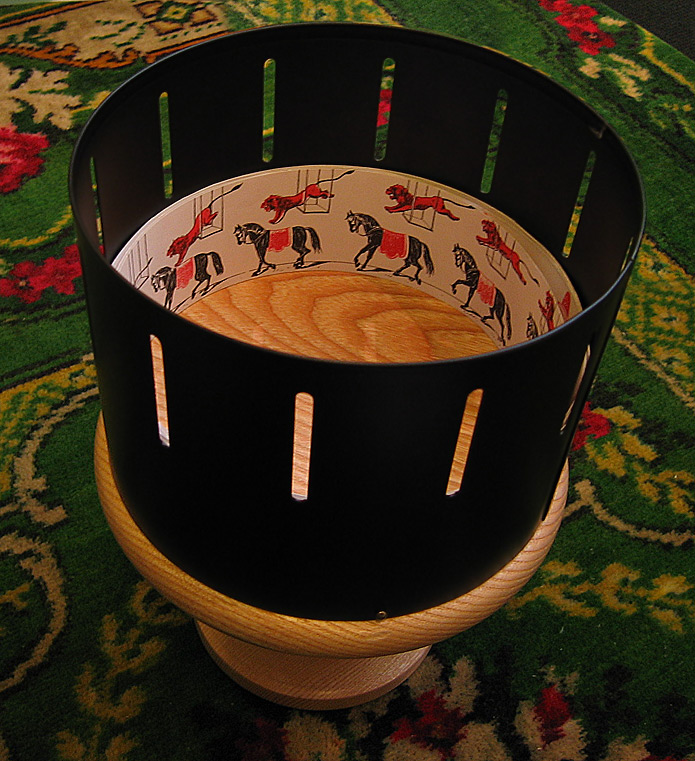
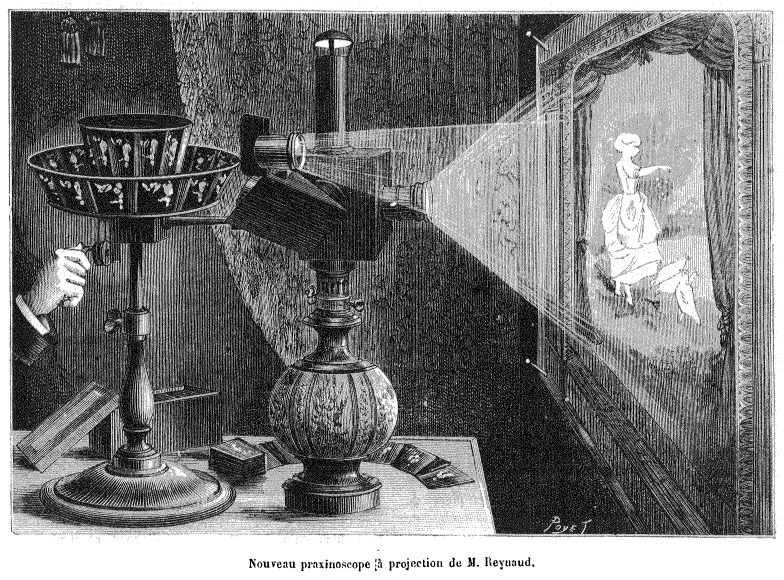

zoescope --------------> praxinoscope------------------->theatre opatique
http://www.youtube.com/watch?v=TAUA6pg_EXk
1906 - Humorous Phases of Funny Faces - James Stuart Blackton
*chalk line effect
http://www.youtube.com/watch?v=wGh6maN4l2I
1907 - Lightning sketches -
http://www.youtube.com/watch?v=pe7HSnZotbU
1908 - Fantasmagorie - Emile Cohl
*considered the 1st fully made animated film
http://www.youtube.com/watch?v=aEAObel8yIE
1909 - Princess Nicotine - James Stuart Blackton
http://www.youtube.com/watch?v=bzvmZAzCF0M
1911 - Little Nemo - Winsor McCay
http://www.youtube.com/watch?v=seOGEwx0NfQ
1914 - Gertie the Dinosaur - Winsor McCay
*1st cartoon character with personality
http://www.youtube.com/watch?v=UY40DHs9vc4
1918 - Sinking of the Lucitania - Winsor McCay
*1st documentary animation
http://www.youtube.com/watch?v=nN-KdPBhyjc
1919 - Feline Frolics - Otto Mesmer
*1st Felix the cat
http://www.youtube.com/watch?v=ZbX-BeSY_18
1920 - Perpetual Motion - Max & Dave Fleischer
*invented rotoscope to catch live action
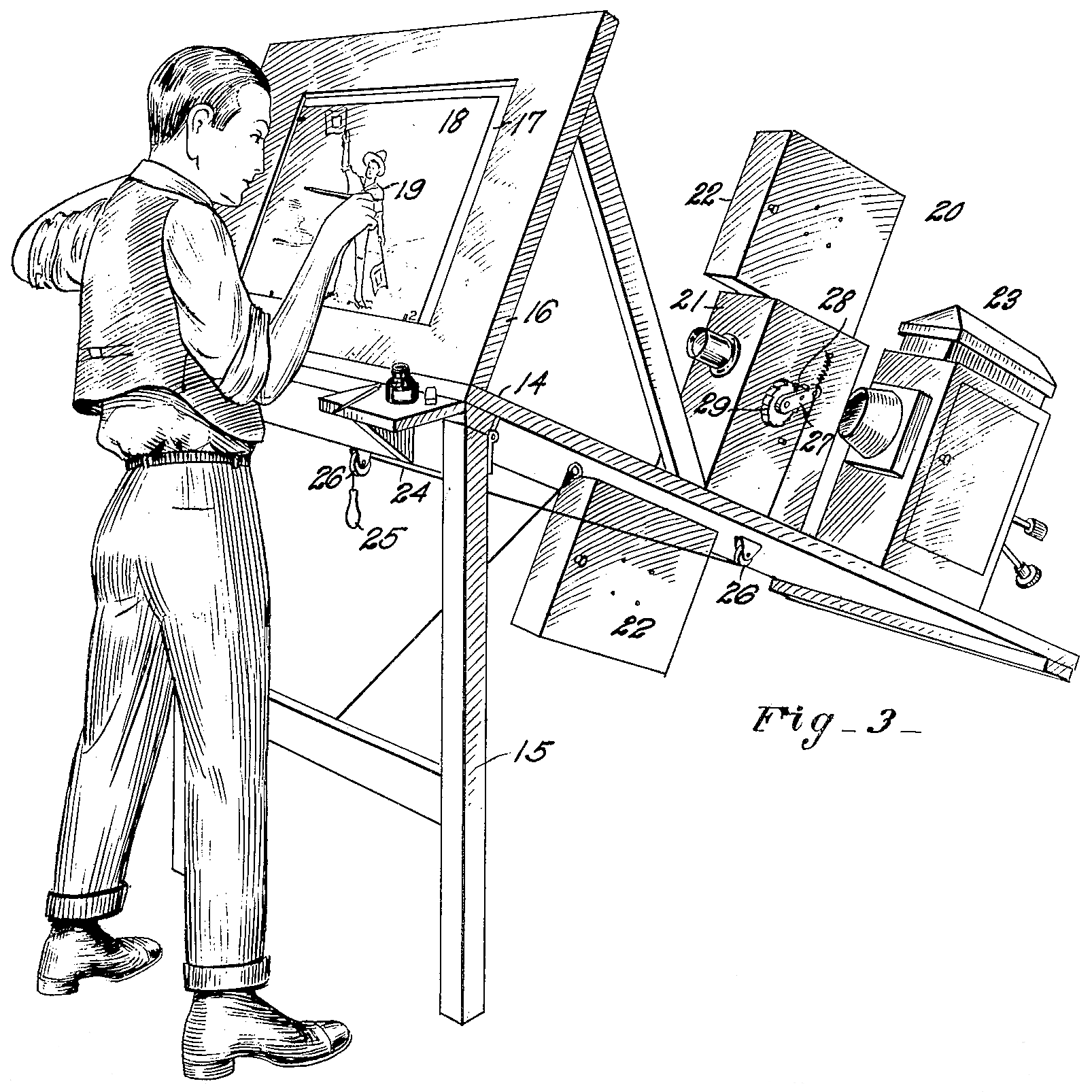
*character's name is Koko the clown
*1919 Tantalizing Fly http://www.youtube.com/watch?v=M-K67eHDKpc
1927 - The Lunch Hound - Walter Lantz & Clyde Geronimi
Animation History: Walt Disney
1920 - Laugh-O-Grams - Walt Disney
*Walt's 1st Studio in Kansas
*stories based on contempory twist on fairy tales
http://www.youtube.com/watch?v=qaknqmbT99c
1923 - Alice's Wonderland - Walt Disney
*live action + animaytion. But later on, animation gradually took over
http://www.youtube.com/watch?v=H58meqbp5Ps
1927 - Trolley Troubles - Walt Disney/ Ub Iwerks
*1st Walt cartoon character: Oswald the Rabbit
http://www.youtube.com/watch?v=QsSmbqH2Yvk
1928 - Steamboat Willie - Disney/ Ub Iwerks
1st sound integrated cartoon (sound + novelty)
http://www.youtube.com/watch?v=BBgghnQF6E4
1929 - Plane Crazy - Disney/ Ub Iwerks
Mickey Sounded cartoon. Release to public earlier than Stemboat Willie
*music by Carl Stalling
http://www.youtube.com/watch?v=kCZPzHg0h80
1932 - Flowers and Trees
*1st animation in full three-color Technicolor ( not like Little Nemo, hand painted)
*Disney's first Academy Awards
http://www.youtube.com/watch?v=VTuIb7BIFqk
1933 - Three Little Pigs - Burt Gillett
*1st cartoon has theme song (hit song, "Who's afraid of Big Bad Wolf")
*Depression- Era
*1st "personality animation", each characters had its own distinctive personality
http://www.youtube.com/watch?v=ZUmyx4p6QXM
1935 - Band Concert
1st colored Mickey Mouse cartoon
(other cartoon had colors, but this is the 1st "colored Mouse")
http://www.youtube.com/watch?v=IErXg5kBXXg
1937 - The Old Mill - Wilfred Jackson
*preparation, test film for Snow White
*created effects for natural environment(wind, water, smoke...)
*1st to use multiplane camera to create illusion of spatial depth and movement
http://www.youtube.com/watch?v=UMwa3ZwTwyA
1937 - Snow White - David Hand
*developed story in 1934
*1st feature animation
*1937 premiered
http://www.youtube.com/watch?v=0niwn2pOEno
1938 - The Brave Little Tailor - Bill Roberts
Mickey was overthrown by other characters, (Donald Duck, Goofy)
Walt Disney tried to make Mickey a well-know hero
http://www.youtube.com/watch?v=fcjwLyVOi30
Subscribe to:
Posts (Atom)